

Most mornings I wait now before grabbing the phone. Listen to thoughts as they roll by, see if my soul’s still alive. Hold my head in my hands and say whatever needs saying. Prayer or monkey herding, it has to be done. Sometimes I remember people and call out their names. Maybe squint out the window checking for snow. Only then do I open an app to see if he’s dead! (MOST mornings, I say…)☀︎ There are 35mm slide images of all I describe here buried deep in a storage unit, and me with no scanner. It’s almost a crime. How strange to be living the way I am now and think of this story. All is connected and I probably needed it. - JHF
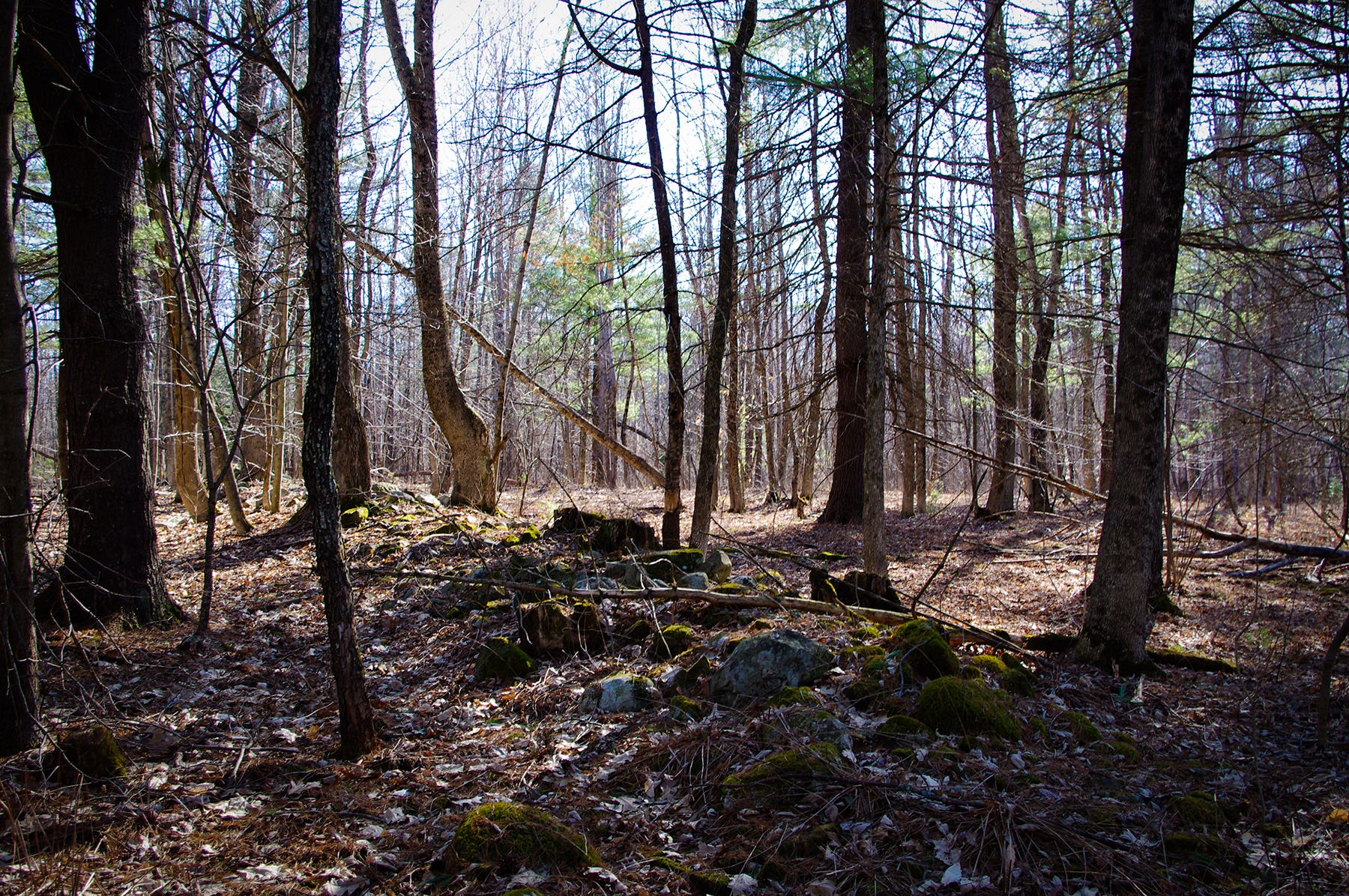
ONCE I WENT SAILING AND NEARLY DIED. It was long ago in the Before Times. My late wife Kathy and I were visiting Aunt Mary and Uncle Tom in the wooded hills of Kennebec County, a few miles outside of Augusta, Maine. They lived in a creaky 200-year-old wooden house on a foundation of granite boulders under towering maples on a 40 acre farm. That sounds idyllic, but it wasn’t, really, although everyone meant well. Mary was still my father’s sister, hard and judgmental to the core. (“But what are you going to do?? You’ll never be president!”) Her grandfather was a circuit-riding “shoutin’ Methodist” preacher from Parsons, West Virginia. Uncle Tom, her first and only husband she’d married at age 56, was a former machinist in the U.S. Merchant Marine, a big gruff fellow from Brooklyn with a huge extended family I never met. There was a barn with giant shipboard metal lathes he’d either found or bought or purloined at retirement. Not farmers, is the point. Their property was mostly woods with rocks and springs. The few open meadows were good places to experience that crystalline New England air on warm summer days with icy shadows that smelled of earth and moss. It made me frantic to put down roots and never leave until I learned about mosquitoes.
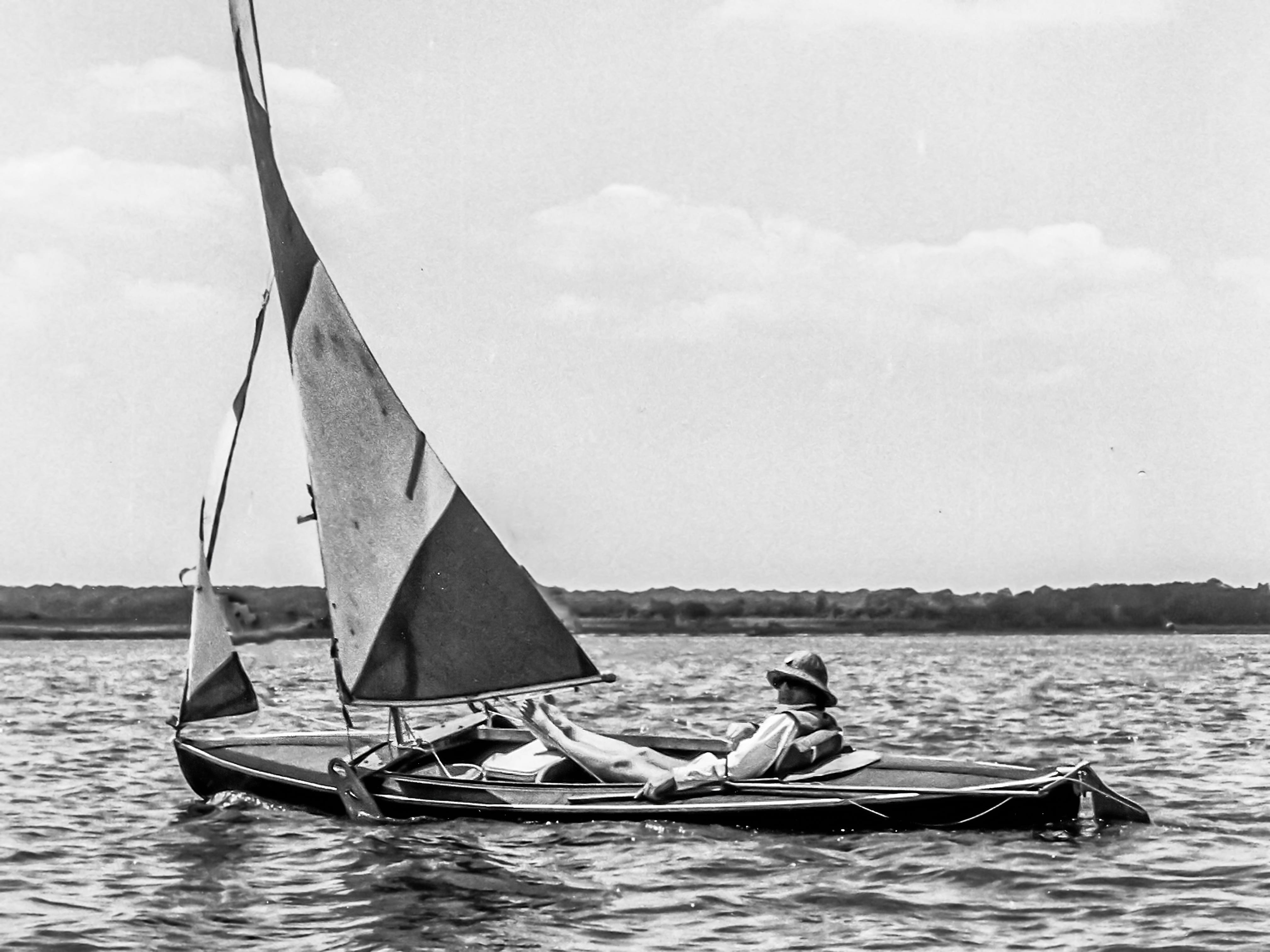
This was the height of my Kent County sailing days. I regularly hauled my Folbot Big Glider down to the sandy banks of the Chester River on the Eastern Shore of Maryland. In places the tidal waterway was almost half a mile wide, so I figured I could handle Moosehead Lake. The Folbot was a large open kayak I’d built from a kit and outfitted with a sailing rig. With lateen sail, leeboards, and rudder installed, I competed most years in all-day downriver races1 from Chestertown to Eastern Neck Island. Take “competed” with a grain of salt, throw in a couple friends in their own hand-built vessel with whiskey and beer, hordes of country club kids on Sunfishes, and a few real sailboats—sometimes a skipjack—to imagine the spectacle. The races were real, with starting guns, stopwatches, officials, the lot. Once in a while the wind blew hard and we flew so fast I had no time to play—hold onto the sheets and the rudder and watch my balance, refreshments be damned. I’d been scared out of my mind (even yelled out for help that nobody heard), driven ashore in a storm, but never sunk and only capsized once, ready at last for the deep coldwater lake in northwestern Maine. A great way to escape from East Vassalboro for a few days, of course.
Kathy and I drove up to Maine in our nearly new ‘82 Jetta. The Folbot and gear were lashed to a flat homemade trailer I’d scrounged from a cedar chopper-built2 camper I’d bought years before somewhere near Austin, basically a heavy steel frame welded to a rusty axle and springs from a dead pickup truck with a thick sheet of plywood on top. The boat slid back and forth and a few things fell out. Nothing important, I hoped. There was nowhere to stop safely and look except grimescent rest stops and exits to nowhere past Philly. New York City, New Haven, Boston, and Portsmouth flashed by. I-95 got more forgiving once we crossed into Maine, where the scariest things were the densely packed forests, dark shadows, and ferns. After a few rancorous days with Aunt Mary and Tom, we were off to the real North. The closer we got to Moosehead Lake, the more backwoods homesteads we saw. Old mobile homes wrapped in plastic to keep out the cold, snowmobiles waiting for winter that wouldn’t be long.
We pulled into the campground at dusk. It was overcast and drizzling, too cold for my T-shirt and shorts. The camping spots on the lake were stupendous, however, and I chose one to easily launch from. We had a fine Coleman tent we could stand up and be home in—the entryway felt like a porch—so nice I almost forgot about freezing in August. The next day we awoke to blue sky and sunshine and realized the lake was humongous. Beyond measure. Impossible. Leaving the sailing rig at the campsite, we paddled out to a large wooded island in the glassy calm distance. It was so far away I began to get nervous, but the sun was warm and the water so clean, I never looked back until after we’d beached. Good thing, that. Wherever we’d come from was only a thin line of green on the horizon! The island itself was primal, pristine, and private. There weren’t any bugs.
The next day dawned gray, windy, and strange. Our campsite was part of a group scattered along the shore of a sheltered inlet with the lake just beyond. I could hear the wind roaring through the tall pines on a rise just behind us, though where I stood by the water was only pleasantly breezy. Out on the lake it looked rough but manageable. There weren’t any whitecaps but it was cloudy and harder to read. I didn’t even feel cold, so I decided to chance it. We hadn’t had breakfast yet and Kathy was busy. I tightened the leeboard clamps, stepped the mast, hoisted the sail, and pushed off from the beach. As I hopped into the Folbot and settled back in the stern, someone yelled to a friend in a neighboring campsite, “Hey, I gotta see this!” —meaning me!
In less than a minute I understood why.
Leaving the cove was a hell of a shock. I hadn’t seen whitecaps because the wind was blowing so hard, the waves were compressed, just a few inches high. Farther out on the lake I could see larger ones. There were no other vessels in sight, the entire gray vastness was covered in foam, and I was instantly terrified out of my wits, careening along at a perilous clip with the sail eased way out to keep from breaking the boat as the shoreline receded from view!
The obvious thing was to “come about,” which meant tacking into the wind quickly enough to get the force of the blast on the other side of the sail and turn back to shore. With a real sailboat this might have been easy, but the Folbot was long in the water with only a small rudder. I tried to, of course, but when the bow hit the “no-go” zone pointed dead into the wind, it just stopped! The sail fluttered helplessly as the wind started blowing me backwards—in a few seconds more, I would lose all control.
Plan B was a dangerous downwind turn (jibe). I could turn away from the wind and race with it, but to change direction another 90°+, I’d have to manhandle the sail to the other side of the boat while simultaneously easing it out to not instantly capsize!3 Being dead in the water yet trapped in the gale, there was no other choice. I moved the rudder over to port (left), held the sheet4 with my left hand leaving plenty of slack, gripped the paddle with both hands to dig deep into the water, and shoved the boat downwind with all of my strength! Dropping the paddle, I yanked the sail back to the boat, grabbed the boom as it passed over my head, and flung it to starboard while bracing for impact. The wind hit the sail with a loud-as-fuck WHOMP and the Folbot almost went under while I switched the sheet to my right hand to hang on securely as we shot for the cove! AAAAGHH! But it worked.

Five seconds of adrenalin-fueled frenzy and heading for shore! In that short time there’d been plenty of damage, too—I’ll never forget how I sailed into the inlet with everything bent. It was so quiet back in the cove, I could hear people laughing and eating their breakfasts. I smelled coffee and bacon and pancakes. No one applauded. Kathy saw me and waved.
Everything I’d been through was private as God.
I did speak of it later, but you had to be there.
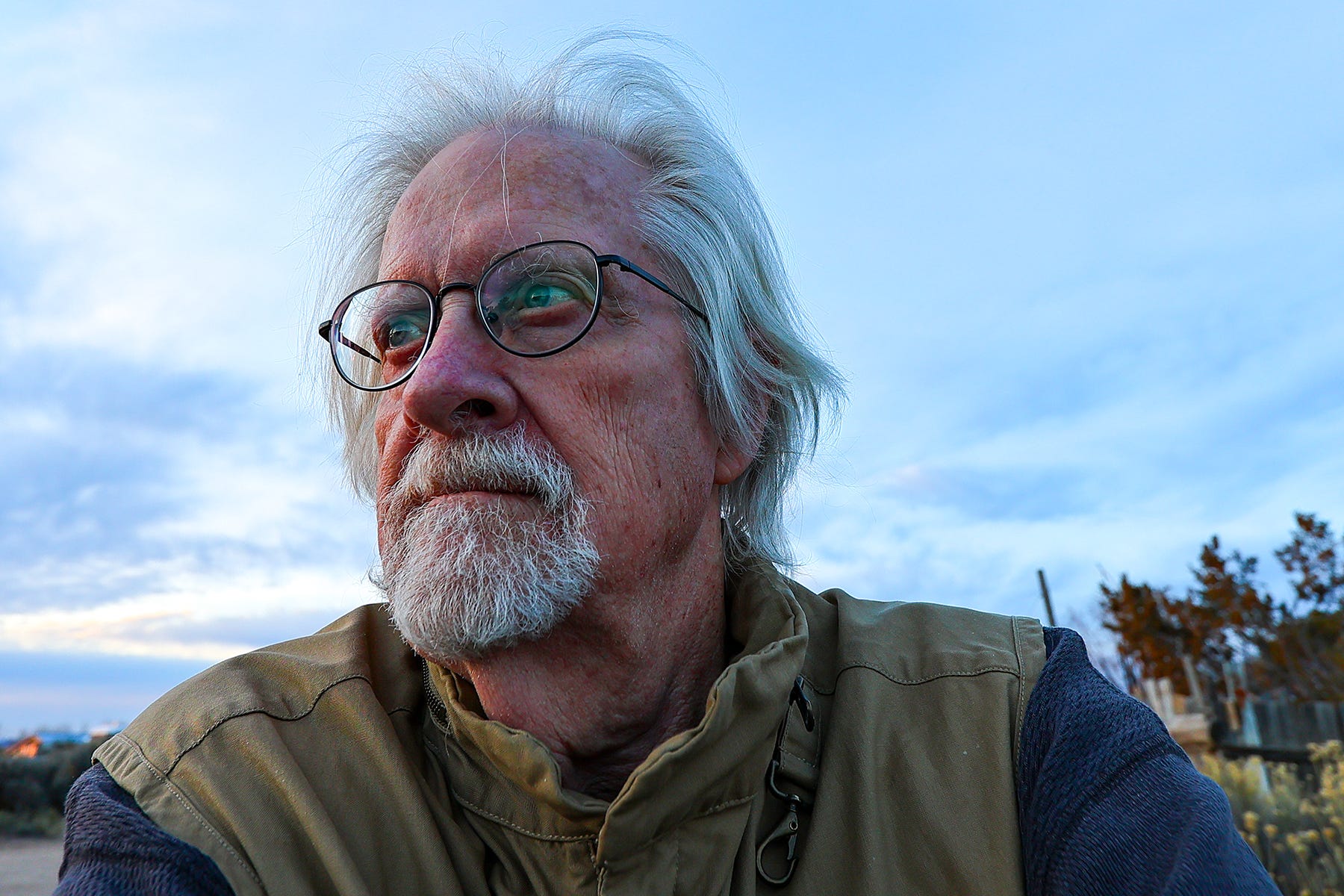
(Howdy from here!👇)
Sometimes upriver races as well, starting from Eastern Neck Island.
Do NOT try this at home!
Rope used to control the position, angle, and tension of the sail.
#tku for fn. 2